What Independent Owners Need to Know: Must-Have Restaurant Technology in 2026

Let’s get one thing out of the way: this article is not going to tell you to buy a robot or start a drone delivery program. Those headlines get clicks, but for the average restaurant it’s more fundamental.
What’s actually happening on the ground — in independent restaurants across the country — is quieter, more practical, and far more impactful.
The restaurant technology story of 2026 isn’t quite science fiction yet. This year it’s about closing the gap that has opened up between restaurants that have modernized their operations and those that haven’t. That gap is now wide enough to feel in your sales, your labor costs, and your ability to bring guests back.
And here’s the uncomfortable part: outdated technology may actually be worse than no technology at all. An old POS that takes three steps to split a check, an online ordering tablet from a third-party platform that prints to the wrong printer, a loyalty punch card that half your guests left at home — these systems consume your team’s time, frustrate your customers, and give you data that’s either wrong or impossible to use. They carry all the cost of technology without delivering the benefit.
This guide is for the independent restaurant owner who knows things need to change but hasn’t found the time, the clarity, or the confidence to act. We’ll walk through what modern restaurant technology actually looks like, what it does for a real business, and how to think about it without getting overwhelmed.
The Current Tech Market and the Play for Independent Restaurants
The numbers paint a clear picture of where the industry is heading.
The global restaurant technology market hit $59.3 billion in 2024 and is projected to reach $314.85 billion by 2033. That’s not a bubble. That’s the permanent reshaping of an industry. 76% of restaurant operators believe technology gives them a competitive advantage — yet only 13% are satisfied with their current tools.
Read that again. Nearly everyone agrees technology matters. Almost nobody thinks what they have is good enough.
73% of restaurant operators increased their technology investments in 2024, marking the highest rate of digital adoption in the sector’s history. And the pressure isn’t coming from inside the industry — it’s coming from guests. 75% of delivery customers say tech-enabled ordering and payment are important when choosing a restaurant. 80% of adults say being part of a loyalty program influences where they choose to dine.
Chains have understood this for years. They’ve been investing in integrated POS systems, digital ordering, loyalty programs, and automated marketing since before the pandemic accelerated everything. Independent restaurants have often been slower to move — not because they don’t see the value, but because the tools weren’t designed for them. Most restaurant technology was built for enterprise chains and then offered to small operators at price points and complexity levels that didn’t make sense.
That’s changed. The tools that were once available only to operators with IT departments and six-figure technology budgets now fit inside a single platform designed specifically for independent restaurants. The question isn’t whether you can afford to modernize. It’s whether you can afford not to.
Could The Tech in your POS System Actually be Holding You Back?
For many independent restaurants, “we have a POS” means they have a system purchased years ago that no longer receives meaningful updates, doesn’t integrate with modern delivery platforms, and requires a phone call to a support line in another continent to answer basic questions. And “we have online ordering” often means a tablet from a third-party platform sitting on the counter — taking orders, charging 25–30% per ticket, and sending data to the platform’s loyalty program instead of yours.
These outdated systems have real costs:
Time cost. Staff working around slow or glitchy systems aren’t serving guests. A clunky POS slows ticket times. A kitchen that’s relying on just paper tickets creates communication lag that compounds during a busy service.
Data cost. One of the most valuable things a modern POS does is collect and organize guest data — who’s ordering what, when, how often, and how much they spend. An old system either doesn’t capture this data or locks it in a format you can’t use. You can’t run targeted marketing if you don’t know who your guests are.
Margin cost. 99% of restaurants report using at least one online ordering platform, with most using an average of three platforms. When those platforms charge 15–30% per order and your own data goes to their loyalty ecosystem instead of yours, every online order is a missed opportunity to build a relationship with your own guest.
Opportunity cost. Every week you spend managing disconnected systems — manually reconciling reports from three different platforms, exporting spreadsheets, copying data between tools — is time not spent on the things only you can do: your food, your team, your guests.
The right technology doesn’t add complexity. It removes it.
The Modern Restaurant Tech Stack: Plain English
Here’s what an integrated, modern restaurant system actually looks like for an independent operator — and what each piece does for your business in practical terms.
Point of Sale: The Foundation
Your POS is the nervous system of your restaurant. Every order, every payment, every ticket, every modifier flows through it. If it’s slow, clunky, or disconnected from everything else, everything downstream suffers.
A modern cloud-based POS runs on durable hardware — terminals, handhelds, and kitchen screens — and syncs everything in real time. It doesn’t go down when the internet hiccups. It doesn’t require a technician to come on-site when something needs updating. Approximately 63% of restaurants are currently using cloud-based POS systems, while 34% continue to rely on legacy POS systems. The gap in capability between those two categories has never been wider.
For the independent operator, the most important thing a modern cloud POS does is serve as a single source of truth: one system that knows what was ordered, what was paid, who the guest was, and how the kitchen performed — all in one place.
Handheld POS: Tableside Ordering That Actually Works
Handheld devices for tableside ordering aren’t new. What’s new is that they work properly — fast enough to use in a real service, integrated directly into the POS rather than operating as a separate system, and reliable enough that you can trust the order will hit the kitchen without a paper duplicate.
For full-service restaurants, handheld POS reduces the number of trips a server makes across the dining room. An order placed at the table goes directly to the kitchen display — no walking to a terminal, no reprinting a ticket because of a modifier error, no “let me go check on that” when a guest asks about their order status. Servers move faster. Table turns improve. And fewer errors means fewer comps.
Kitchen Display Systems: Replacing or Supplementing Paper Tickets
The hand-written ticket is one of the most persistent relics of old-school restaurant operations. It’s tactile, everyone understands it, and it feels reliable. It’s also one of the biggest sources of error, waste, and miscommunication in a busy kitchen.
A Kitchen Display System (KDS) replaces hand written and printed paper tickets with digital screens in the kitchen — organized, prioritized, color-coded by order age, and connected directly to the POS. Orders from the dining room, from the bar, from the online ordering system, and from delivery apps all appear in one place, in the right order, with the right timing.
The practical result: fewer missed modifiers, fewer lost tickets, faster ticket times, and a kitchen team that can see what’s coming rather than reacting to it. And when a guest asks how long their food will be, the system knows — because ticket times are tracked automatically.
Online Ordering: Commission-Free and Integrated
This is where the math gets stark. A restaurant doing $15,000 per month in online orders through a third-party platform paying 25% commissions is sending $3,750 to that platform every month — $45,000 per year. For a business operating on thin margins, that’s not a fee. It’s a business-defining cost.
A modern POS with built-in commission-free online ordering captures those orders through the restaurant’s own system — on your website, through a direct link, without a middleman taking a cut. The order routes directly to the kitchen. The guest’s data belongs to you. And the money stays in your business.
This doesn’t mean abandoning third-party platforms entirely. DoorDash, Uber Eats, and Grubhub still drive discovery for new guests. But having those orders integrate directly into your POS — rather than printing to a separate tablet and requiring manual entry — eliminates the operational friction of managing multiple ordering channels. Native integration with third-party delivery platforms means every order, regardless of source, flows through the same kitchen screen, the same reporting, the same system.
Delivery Dispatch: Managing Your Own Drivers
For restaurants that operate their own delivery program, managing drivers manually is one of the easiest ways to introduce chaos into an otherwise controlled service. Who’s where, what order are they carrying, and when will they be back?
Delivery dispatch built into the POS brings that process into the same system managing everything else. Orders are assigned, drivers are tracked, and the flow of delivery alongside dine-in service becomes manageable rather than improvised.
Self-Ordering Kiosks: Meeting the Guest Where They Are
In 2023, the highest restaurant technology investment priority was making the service area more productive or efficient — 51% of restaurants invested here, with 55% planning to in 2024. Self-ordering kiosks are the most visible expression of that priority in full effect.
For counter-service and fast-casual operations, a kiosk does two things well: it frees your staff from the register to focus on food and guest experience, and it reliably increases average check size. When guests order at their own pace without a line forming behind them, they explore the menu, add items, and customize their orders more than they would when face-to-face with a cashier during a rush. Research consistently shows kiosk orders running 15–30% higher in average ticket value than counter orders.
The key is integration. A kiosk that’s bolted on as a separate system creates the same problems as every other disconnected tool. One that’s native to your POS sends orders directly to the kitchen, captures guest data for loyalty, and feeds the same reporting as every other order channel.
Loyalty Program: The Retention Engine
80% of adults say being part of a loyalty program influences where they choose to dine, and 46% of restaurants plan to update or enhance their loyalty programs in 2025. Loyalty programs work — but only when they’re built into the guest experience rather than operating as a separate program your staff has to remember to mention.
A native loyalty program inside your POS means every transaction is an opportunity to enroll, earn, and redeem — automatically. Guests don’t need a separate app. Staff don’t need to ask. Points accumulate with every purchase, and the system tracks redemptions, identifies your most loyal guests, and gives you the data to communicate with them meaningfully.
The compounding effect is significant: loyalty members visit more frequently, spend more per visit, and are far more responsive to marketing. They’re your most valuable guests. The technology to identify and retain them isn’t complicated — it just needs to be connected to everything else.
Gift Cards: Revenue Now, Visits Later
Gift cards are one of the most underused tools in independent restaurant operations. They’re simple, they drive revenue at the point of purchase, and they bring new guests in when the recipient redeems — often guests who’ve never visited before.
A gift card program integrated into your POS eliminates the operational friction of managing paper certificates or cards that aren’t tracked in the system. Every gift card sale and redemption flows through the same reporting as everything else. And the float — the portion of gift cards sold that are never fully redeemed — is pure margin.
SMS and Email Marketing: Automated Guest Communication
53% of restaurants have automated email marketing, and 47% have automated staff scheduling — but most independent operators are still sending manual emails to a stagnant list, if they’re doing it at all.
The difference between manual and automated marketing isn’t just efficiency. It’s relevance. An automated system that knows a guest hasn’t visited in 35 days can send them a personalized win-back offer at exactly the right moment. A system that knows a loyalty member is 50 points from their next reward can nudge them toward a visit. A system that has 400 opted-in SMS subscribers can fill a slow Tuesday night with a single 30-second campaign.
None of this requires a marketing hire or a separate platform when it’s built into your POS. The guest data is already there — the marketing system uses it automatically.
Restaurant Website with Built-In SEO
Only 69% of restaurants maintain their own website — despite 99% having some form of social media presence. That gap is a missed opportunity. Social media profiles are rented space. A website is owned real estate that builds search authority over time, captures direct online orders without commissions, and exists permanently on your terms.
A restaurant website connected to your POS keeps menu information current automatically, links directly to your commission-free online ordering system, and is built with local SEO structure from the start — so it shows up when people in your area search for the type of restaurant you are.
Reporting That Actually Answers Your Questions
The last piece is the one that ties everything together. Modern POS reporting isn’t a stack of end-of-night printouts or a spreadsheet you export and try to interpret. It’s a dashboard that answers the questions you’re actually asking: What’s my best-selling item this week? Which server has the highest upsell rate? What’s my food cost compared to last month? What days drive the most loyalty redemptions?
Custom reports let you track the metrics that matter to your specific operation — not a generic template built for a chain. And because the data is coming from a single integrated system, it’s accurate. You’re not cross-referencing numbers from three different platforms and wondering why they don’t match.
What This Looks Like as a Complete System
This is the part that matters most for an independent operator evaluating technology: each of these tools is genuinely useful on its own, but the real value is in how they work together.
Consider the flow of a single guest relationship through a modern, integrated system:
A new guest finds your restaurant through a Google search — your SEO-optimized website appears in the results. They visit and sign up for your loyalty program at checkout. That signup adds them to your email and SMS list. Three weeks later, when they haven’t returned, an automated text goes out: “We miss you — here’s a free appetizer on your next visit.” They come back, redeem the offer, earn more loyalty points, and receive an automated notification that they’re close to a reward milestone. They become a regular.
That entire sequence — discovery, acquisition, engagement, retention — runs without manual effort. It runs because the website, the POS, the loyalty program, and the marketing tools are all the same system, sharing the same guest data.
This is what chain restaurants have been doing with expensive, enterprise-grade software for years. It’s now available to a neighborhood bistro, a family-owned bar, or a single-location taqueria — in a form that doesn’t require an IT department to set up or maintain.
Why “Later” Is Getting More Expensive
The common objection to restaurant technology investment is timing: not now, things are busy, let’s revisit when it slows down. There’s always a reason to wait.
But technology inaction compounds. Every month without a loyalty program is another month of guests walking out the door whose names and contact information you don’t have. Every month routing online orders through a third-party platform at 25% commission is another month of margin being paid to someone else. Every month without automated marketing is another month of lapsed guests who aren’t being brought back.
48% of restaurant operators expect more intense competition in 2025 compared to 2024. The restaurants that modernized during and after the pandemic have been building guest databases, loyalty rosters, and operational efficiency while others waited. That advantage doesn’t disappear — it accumulates.
The good news is that getting started doesn’t require a six-month implementation project. A modern, integrated POS platform designed for independent restaurants can be up and running in days, with guided setup and support included. You don’t need to become a technology expert. You need a system that handles the technology so you can focus on what you’re already an expert in.
Rezku: Built for Independent Restaurants
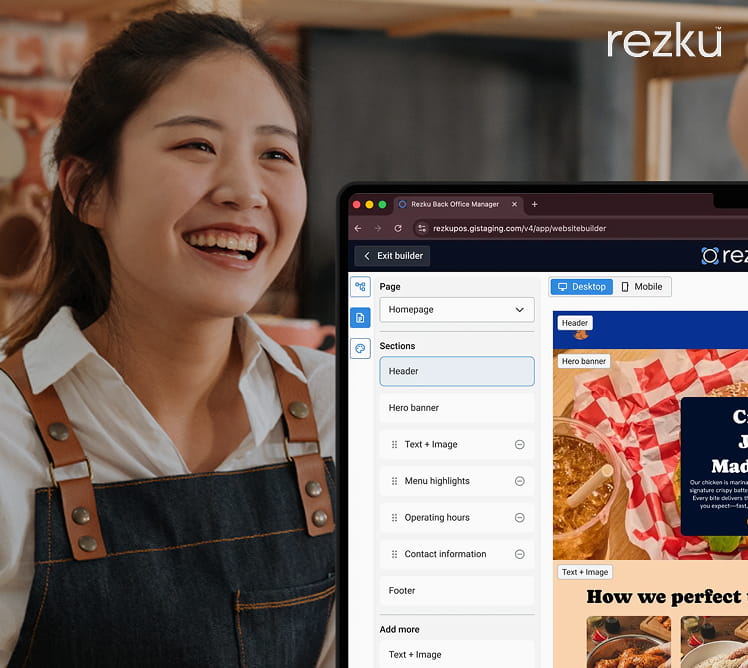
Rezku’s platform brings every piece of this together in a system designed specifically for independent restaurants and bars — not adapted from enterprise software, not pieced together from a marketplace of third-party apps, but built as a single integrated platform from the ground up.
The full Rezku stack includes: cloud-based POS, handheld tableside ordering, Kitchen Display System, self-ordering kiosk, commission-free online ordering, native integration with third-party delivery platforms (including DoorDash), delivery dispatch, loyalty program, gift cards, SMS and email marketing, and an SEO-optimized restaurant website — all connected to the same guest data, all managed from one dashboard, with US-based support available when you need it.
Setup is handled with you, not handed off to you. Training is included. And when something isn’t working at 7pm on a Saturday, you reach someone who knows your system and can fix it — not a call center working through a generic script.
For the independent operator who’s been running on outdated tools, disconnected systems, or a “good enough” POS that was purchased years ago: the gap between where you are and where you could be is smaller than it looks. The technology exists. The support exists. The only variable is the decision to start.
Frequently Asked Questions
I’m not a tech person. Will I actually be able to use this?
Yes — and that’s not marketing language. Modern restaurant POS systems are designed to be learned quickly by staff who’ve never used them before. Rezku specifically is built for independent operators, not IT departments. The interface is intuitive, training is included, and the support team walks you through every step of setup. If you can use a smartphone, you can use a modern restaurant POS.
We already have a POS. Why would we switch?
The question isn’t whether you have a POS — it’s whether what you have is actually working for your business. If your current system doesn’t integrate with your online ordering, doesn’t power a loyalty program, doesn’t give you usable reporting, and isn’t supported by a team you can reach quickly when something breaks, it’s not a complete system. It’s a cash register with a screen. The operational and revenue gap between that and a modern integrated platform is significant.
What about the cost? This sounds expensive.
The relevant comparison isn’t the monthly subscription fee against zero — it’s the full cost of your current approach. If you’re paying 25–30% commissions on online orders, running loyalty on paper punch cards, managing marketing manually, and losing data every time a guest walks out the door, those costs are real even if they don’t appear as a line item. A modern system typically pays for itself quickly in recovered margin, reduced labor friction, and increased repeat visits from guests who would otherwise have slipped away.
How long does it take to set up?
For most independent restaurants, the core system — POS, online ordering, kitchen display, and loyalty — can be operational within a few days. Menu building, staff training, and hardware setup are handled as part of the onboarding process. You’re not on your own figuring it out.
What if something breaks during service?
This is the question that keeps operators on outdated systems longer than anything else — the fear that new technology will fail at the worst possible moment. Rezku’s cloud-based system is designed for offline reliability, meaning it keeps processing orders even if your internet connection drops. And US-based support is available to help when you need it. The system that breaks during service is far more likely to be the ten-year-old POS that hasn’t been updated in three years than a modern cloud platform.
Do I have to replace everything at once?
Not necessarily. The right approach depends on your current setup and priorities. Some operators start with the core POS and online ordering, then add marketing and loyalty tools as they get comfortable. Others bring the full stack online at once during a planned transition. Rezku’s team helps you sequence the implementation in a way that makes sense for your operation.
Ready to see what a fully integrated restaurant system looks like for your specific operation? Schedule a free Rezku demo and we’ll walk through every piece of it together.
Is Rezku the POS system you’ve been searching for?
Get a custom quote and start your free trial today.
Related Posts