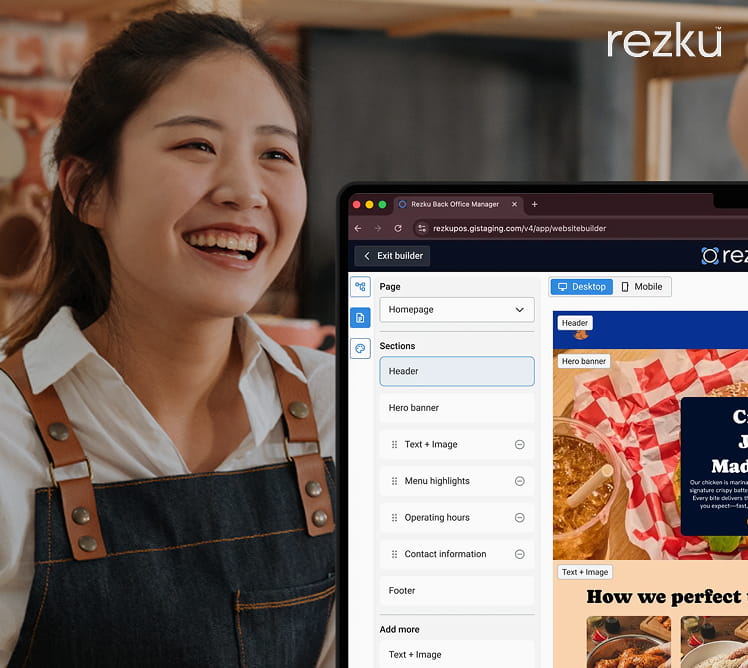
Top SpotOn POS Alternatives for Restaurants in 2026


Running a restaurant means operating on thin margins and tighter timelines. Your POS system has to work — not just on a good day, but during a packed Friday dinner service when there’s no time to troubleshoot. For many restaurant owners, SpotOn POS checked the boxes on paper, but falls short in practice. If you’ve been searching for a better fit, you’re not alone. Across the web, SpotOn customers are reacting to recent policy changes and looking for an alternative.
This guide breaks down the best SpotOn alternatives for independent restaurants and bars in 2026 — with real details on pricing, features, and what actually matters when you’re trying to run a profitable operation.
What Is SpotOn POS?
SpotOn is a cloud-based point-of-sale and payment processing platform built primarily for restaurants, retail, and service businesses. It offers hardware (including a 15” station, 10” counter unit, and 6.5” handheld), integrated payment processing, commission-free online ordering, loyalty features, and reservations — all bundled together.
On paper, it’s a comprehensive package. In practice, the experience depends heavily on the restaurant’s size, setup, and willingness to navigate SpotOn’s payment ecosystem.
SpotOn Pricing (2026)
SpotOn uses two main pricing structures for restaurants:
| Plan | Monthly Software Fee | Processing Rate |
|---|---|---|
| Quick Start (Free) | $0/month | 2.89% + $0.25/transaction |
| Paid Restaurant Plans | $99–$135/month per station | 1.99% + $0.25/transaction |
| Additional employee fee | +$3/month per employee | — |
| Monthly minimum | $75 minimum applies | — |
| Setup fee (paid plans) | $1,000 one-time | — |
| Switching payment processors | $995 conversion fee | Software fees double |
The free plan sounds attractive, but the cost is built into a higher card processing rate of 2.89% + $0.25 per transaction. And if you ever want to use a different processor while keeping the SpotOn software, you’ll pay a $995 conversion fee and your software license costs will double — a significant lock-in that many owners don’t learn about until they try to leave.
The Real Complaints About SpotOn
SpotOn has a solid overall reputation in some categories, but the same issues appear repeatedly across review platforms:
Billing discrepancies. The volume of complaints about charges not matching agreed rates is hard to ignore. Billing complaints appear consistently across the BBB, Trustpilot, and various user comment sections. One Capterra reviewer described five months of repeated overcharges totaling over $1,300 — with no resolution despite escalating to multiple levels of support.
Processing lock-in. SpotOn requires you to use their payment processor. If you want out of that arrangement later, the $995 conversion fee and doubled software costs make it expensive to change course.
Support inconsistency. Common complaints found online often relate to issues with customer support — responsiveness and effectiveness in resolving technical problems — particularly during high-volume service hours.
Limited flexibility. Menu edits live in the back office, the integration marketplace is thin, and you can’t buy many peripherals directly. For restaurants with complex, frequently-changing menus, this creates real friction.
Recommendation: If you’re considering SpotOn, get everything in writing before you sign. Make sure you understand your exact processing rates, monthly fees, hardware costs, and cancellation terms. And then actually review your statements every month to make sure everything matches what you agreed to.
Why Independent Restaurants Are Looking for SpotOn Alternatives
Independent restaurants have different needs than large chains. They need a system that’s flexible enough to handle a changing menu, simple enough that a new server can learn it fast, and backed by a support team that actually picks up the phone.
The core issues driving restaurant owners to seek SpotOn alternatives:
- Pricing complexity — The free plan’s elevated processing fees can cost more than a paid plan at moderate volume, and the $75/month minimum applies regardless
- Payment processor lock-in — $995 to switch processors, plus doubled software costs, means you’re financially committed once you sign
- Billing transparency concerns — Multiple independent review sources flag billing discrepancies as the most common complaint
- Integration gaps — The integration marketplace is sparse, limiting connection to third-party tools operators already use
- Support during peak hours — Inconsistent response times when restaurants need help most
The Best SpotOn Alternatives for Restaurants in 2026
1. Rezku — Best Overall for Independent Restaurants and Bars
Rezku is purpose-built for independent restaurants and bars — not adapted from a retail platform or stretched to fit the hospitality industry as an afterthought. Every feature in the system is designed around how restaurants actually operate: fast ticket flow, flexible modifiers, tableside ordering, real-time kitchen communication, and the kind of offline reliability you need when the internet goes down mid-service.
What makes Rezku different:
- Transparent, flat pricing with no hidden fees and no payment processor switching fees. Rezku is the payment processor.
- Commission-free online ordering and integrated delivery connections (including DoorDash)
- US-based support team with unlimited training included — not a third party call center or work from home network. Real people who know restaurant operations and work in the office.
- White-glove onboarding that handles menu build, staff training, and migration from your current system
- Month-to-month flexibility — After an initial agreement period, no long-term contract traps
- Built-in loyalty and marketing tools that connect to your guest data
- QuickBooks integration via Shogo, plus scheduling through 7shifts and delivery through DoorDash Drive
For owners coming from SpotOn who have dealt with billing surprises or felt trapped by payment processing contracts, Rezku’s approach is a clear contrast: what you’re quoted is what you pay, and switching is never penalized.
Best for: Independent restaurants, full-service dining, bars, and multi-concept operators who want a restaurant-first system with real human support.
2. Clover — Best for Hardware Flexibility
Clover is a versatile POS platform that spans restaurants, retail, and service businesses. It’s built around flexible, modular hardware — from compact countertop terminals to full-size stations and handhelds — and connects to a broad app marketplace for third-party integrations.
Strengths: - Wide range of hardware options across price points - Large third-party app marketplace - Scalable to multiple locations
Considerations: - Support quality can vary significantly depending on which reseller set up your system - Restaurant-specific features are less deep than dedicated hospitality platforms - Costs can escalate as you add apps and locations
Best for: Restaurants that prioritize hardware flexibility and are comfortable managing integrations independently.
3. Square for Restaurants — Best for Small Cafes and Simple Setups
Square is one of the most recognizable names in point-of-sale, and for good reason: it’s fast to set up, intuitive to use, and offers a free baseline plan for low-volume operations. For a small café, food truck, or pop-up concept, it covers the fundamentals without a lot of configuration overhead.
Strengths: - No monthly fee on the base plan (pay-as-you-go processing) - Runs on standard iOS and Android devices - Fast setup and easy staff training
Considerations: - Missing the deeper restaurant-specific features that full-service or high-volume concepts need - Online ordering, loyalty, and other modules add up quickly on paid tiers - Less suited to complex menus, multi-course tasting formats, or high table-count environments
Best for: Small cafes, juice bars, counter-service concepts, or operators who want a low-cost entry point with minimal setup.
4. Lightspeed Restaurant — Best for Multi-Location Analytics
Lightspeed is a feature-rich POS platform with powerful inventory management, advanced reporting, and analytics tools that appeal to larger operations running multiple locations. It’s built for data-driven management and works well for operators who want detailed visibility across their business.
Strengths: - Best-in-class inventory and cost management tools - Strong analytics across multiple locations - Detailed reporting for food cost, labor, and sales trends
Considerations: - Complexity can overwhelm smaller, single-location operations - Pricing is on the higher end - Onboarding and learning curve can be significant for staff
Best for: Multi-location restaurants, larger concepts, and operators who prioritize detailed business intelligence and inventory management.
5. Revel Systems — Best for Enterprise-Level Customization
Revel is a cloud-based POS platform designed for enterprise deployments — think large restaurant groups, franchise operations, and multi-unit chains that need deep customization, real-time reporting across locations, and enterprise-level control. It’s powerful, but that power comes with cost and complexity.
Strengths: - Extensive customization at the enterprise level - Real-time analytics across all locations - Scalable for very large, complex operations
Considerations: - Higher cost than most alternatives - Steep learning curve for staff and managers - Generally over-engineered for independent or single-location restaurants
Best for: Large restaurant groups, franchise operators, and multi-unit chains with complex operational needs.
SpotOn vs. Alternatives: Feature Comparison
| Feature | SpotOn | Rezku | Clover | Square | Lightspeed | Revel |
|---|---|---|---|---|---|---|
| Built for restaurants | ✅ Yes | ✅ Yes | ⚠️ Partial | ⚠️ Partial | ⚠️ Partial | ✅ Yes |
| Transparent pricing | ⚠️ Mixed reviews | ✅ Yes | ⚠️ Varies by reseller | ✅ Yes | ✅ Yes | ⚠️ Quote-based |
| Commission-free online ordering | ✅ Yes | ✅ Yes | ❌ No | ⚠️ Add-on | ⚠️ Add-on | ⚠️ Add-on |
| US-based support | ⚠️ Inconsistent | ✅ Yes | ⚠️ Via reseller | ⚠️ Mixed | ✅ Yes | ✅ Yes |
| Unlimited training included | ❌ No | ✅ Yes | ❌ No | ❌ No | ❌ No | ❌ No |
| No payment processor | ❌ $995 fee to switch | ✅ Yes | ⚠️ Varies | ✅ Yes | ✅ Yes | ✅ Yes |
| Month-to-month contract | ✅ Yes | ✅ Yes | ✅ Yes | ✅ Yes | ✅ Yes | ⚠️ Annual |
| DoorDash / delivery integration | ✅ Yes | ✅ Yes | ⚠️ Via apps | ⚠️ Via apps | ⚠️ Via apps | ⚠️ Via apps |
| Loyalty program built-in | ✅ Paid add-on | ✅ Included | ✅ Via apps | ✅ Paid add-on | ✅ Via apps | ✅ Yes |
| White-glove onboarding | ⚠️ Paid ($1,000 setup) | ✅ Included | ❌ No | ❌ No | ⚠️ Paid | ⚠️ Paid |
| Best for | Mid-size restaurants | Independent restaurants & bars | Hardware-focused ops | Small cafes | Multi-location | Enterprise |
Note: Features and pricing reflect publicly available information as of 2026. Contact each provider for current quotes specific to your restaurant’s setup.
Why Rezku Is the Strongest SpotOn Alternative for Independent Operators
The alternatives above each serve a purpose. Clover is strong if hardware variety matters most. Square is fine for a simple counter-service café. Lightspeed earns its keep at larger multi-location operations. But for the independent restaurant owner — the person running a neighborhood bistro, a busy bar, a food truck, or a mid-size full-service concept — none of them are built specifically for you.
Rezku is.
The difference shows up in the details:
Support that answers. Rezku’s support team is US-based and included in your subscription — no tiered support packages, no extra fees for training, no getting bounced between departments. When something goes wrong at 7pm on a Saturday, you reach someone who knows restaurant systems.
Pricing you can trust. The billing discrepancy complaints that follow SpotOn across review platforms don’t apply here. Rezku quotes flat, transparent pricing — and what you’re quoted is what appears on your statement.
A system built for restaurants. Table management, kitchen display integration, tableside ordering, real-time reporting, commission-free online ordering, loyalty, and delivery integrations — all built into a system designed for restaurants from the ground up, not retrofitted onto a retail platform.
How to Switch from SpotOn to Rezku
Switching POS systems sounds daunting, but Rezku’s white-glove onboarding process is designed to make it straightforward. Here’s how it typically works:
- Schedule a demo — A Rezku specialist walks through your current setup and identifies what you need
- Menu build — Rezku’s team builds your menu configuration based on your current setup
- Hardware setup — Durable hardware is configured and shipped; remote installation is available in most cases
- Staff training — Unlimited training is included; your team learns the system before go-live
- Go live — Rezku supports the transition and remains available for questions after launch
If you’re within the first year of your SpotOn contract, review SpotOn’s cancellation terms carefully — if you cancel within one year of installation, you will be required to pay SpotOn the difference between your initial purchase amount and the full list price of all hardware purchased. After one year, you own the equipment and can move on with simple notification.
Frequently Asked Questions
What is the main difference between Rezku and SpotOn?
The biggest differences are in pricing transparency, support, and flexibility. Rezku offers flat pricing with no hidden fees, no payment processor lock-in penalties, and US-based support with unlimited training included. SpotOn’s pricing has been flagged in multiple reviews for billing discrepancies, and switching payment processors after signing costs $995 plus doubled software fees. Rezku is also built exclusively for restaurants and bars, while SpotOn serves a broader range of business types.
Is Rezku good for small restaurants?
Yes. Rezku works well for small independent restaurants because it offers flexible pricing, fast setup, and minimal hardware footprint. Some configurations run entirely on handheld devices without a full terminal station. Commission-free online ordering and QR code menus also help smaller operators compete without paying third-party commissions on every online order.
Can I integrate Rezku with delivery services like DoorDash?
Yes. Rezku integrates with DoorDash for delivery, 7shifts for staff scheduling, and QuickBooks (via Shogo) for accounting. This covers the core third-party tools most independent restaurants already use.
Does Rezku require a long-term contract?
No. Rezku operates on month-to-month agreements, so you’re not locked into a multi-year commitment. This is especially important for operators who’ve dealt with the cost and frustration of trying to exit a restrictive POS contract.
What happens to my data if I switch from SpotOn to Rezku?
Rezku’s onboarding team handles the transition process, including moving your menu data and customer information. The goal is a smooth, disruption-free migration so your operation doesn’t miss a beat.
Is SpotOn a good POS system?
SpotOn works for many restaurants, and it has strong features in areas like labor management and inventory. The consistent caution from independent reviewers, however, centers on billing transparency — the volume of complaints about charges not matching agreed rates is hard to ignore — and the processing lock-in structure. It may be a good fit for restaurants that review their statements closely and are comfortable staying within SpotOn’s payment ecosystem long-term.
How much does restaurant POS software typically cost?
Costs vary widely. Entry-level systems like Square offer free base plans with per-transaction processing fees. Mid-tier restaurant platforms typically range from $69 to $135 per month per station, plus hardware and processing. Full-service enterprise platforms can cost significantly more. The key is to calculate total cost of ownership — software fees, hardware, processing rates, and any add-on modules — not just the headline monthly price.
Looking for a POS system that works the way your restaurant does? Schedule a free Rezku demo and see the difference that a restaurant-first platform makes.
Is Rezku the POS system you’ve been searching for?
Get a custom quote and start your free trial today.
Related Posts