How to Create a Restaurant Marketing Plan That Fills Tables: A Practical, No-guesswork Framework for Full-service Restaurants

META DESCRIPTION: A practical, data-backed marketing plan for full-service restaurants — from gastropubs to fine dining — covering loyalty, SMS, email, timed offers, local SEO, and social media. Learn how Rezku’s built-in tools turn your guest data into a reliable system for filling tables.
With tighter costs and limited resources many independent restaurant owners think they can’t afford to market their restaurant. The truth is, they can’t afford not to.
Restaurants that market well don’t spend more. They spend more deliberately. They understand who they’re trying to reach, which channels those guests actually use, and what messages move them from a “maybe” to a reservation tonight. And crucially, they’ve built systems — not campaigns — that keep guests coming back without requiring constant manual effort.
The National Restaurant Association projects industry sales will reach $1.55 trillion in 2026, fueled by strong consumer demand to dine out. But that rising tide doesn’t lift every boat equally. August 2025 data shows industry-wide same-store sales up 2.3%, but traffic dipping 0.2% — meaning revenue gains are coming from higher check sizes, not more covers. The restaurants winning a greater share in this environment are the ones investing in guest retention and smart digital marketing. The ones losing ground are the ones still running on word-of-mouth and hope.
This guide gives you the blueprint to build a real actionable marketing plan — the kind that fits on one page but drives all your marketing decisions and brings customers back every week of the year.

Step 1: Know Your Numbers Before You Spend a Dollar
Marketing without data is just spending. Before you write a single promotional email or buy a single ad, you need a baseline — a clear picture of where your restaurant stands right now so you know what’s working, what’s failing, and what a “win” actually looks like.
Your POS system is the starting point. Pull the last 90 days of reports and establish these core metrics:
Average Check Size — Total revenue divided by covers. If yours is lower than your category average, your marketing focus should be on upsell mechanics, not just traffic. A full bistro table spending $42 per head is a different problem than a slow Tuesday with 20 covers.
Repeat Visit Rate — What percentage of your guests from any given month come back within 90 days? Industry research shows approximately 70% of first-time restaurant diners never return — and that number is the most important marketing problem you have. If you don’t know your own retention rate, you’re flying blind on your most expensive leak.
Customer Lifetime Value (CLV) — Customer Lifetime Value for loyalty program members averages $1,200 annually — 4.2x higher than non-members. Even a rough calculation (average check × visits per year × average guest lifespan) gives you the number that justifies marketing investment. If a loyal regular is worth $800 over two years, spending $15 in automated campaigns to win them back after a 60-day absence is obvious math in your favor.
Covers by Day and Daypart — Where exactly are your slow periods? A sports bar that’s full Thursday through Sunday but dead Monday through Wednesday needs a completely different marketing strategy than a fine dining room struggling to fill Saturday’s second seating. Granular data turns vague problems into specific campaigns.
Food Cost Percentage — Not a marketing metric on the surface, but critical for offer design. Knowing your food cost on every menu item tells you which dishes you can afford to promote heavily, which ones make compelling “free add-on” loyalty rewards, and which timed offers will drive traffic without destroying margin.
Once you have these numbers, you can set goals that are specific, measurable, and tied to revenue. 45% of restaurant operators say building and maintaining sales volume is their top challenge — and most of them don’t have a quantified target. A goal like “fill more tables” is useless. A goal like “increase Wednesday dinner covers by 18% over 90 days by launching a midweek sommelier’s pairing promotion and targeting our email list of 1,400 regulars” is a plan.
How Rezku Helps
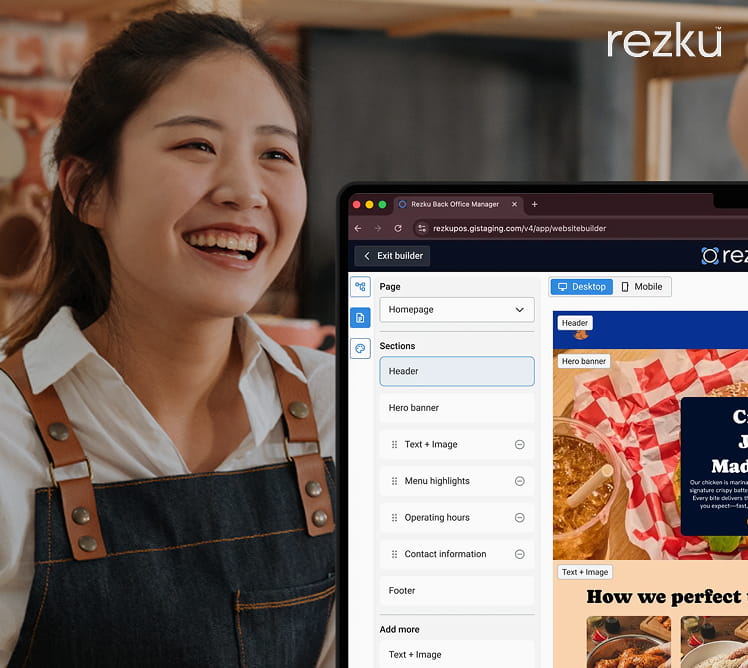
Rezku’s reporting and analytics dashboard connects POS sales data, loyalty program activity, and online ordering in one place — giving you the cover counts, check averages, and daypart breakdowns that most independent restaurants can only access through manual spreadsheet work. When your data is centralized, setting meaningful goals takes minutes, not an afternoon.
Step 2: Define Who You’re Actually Marketing To
The worst marketing mistake full-service restaurants make — across every concept from sports bars to fine dining — is trying to be the restaurant for everyone. That instinct is understandable. Empty seats feel like lost revenue. But unfocused marketing produces unfocused results and typically fails to connect with anyone.
The guests who matter most to your business are not the broadest possible audience. They’re the guests who come back, spend more, and tell their friends. Your marketing job is to attract more people like them — and to give the ones you already have a reason to keep choosing you.
Build Honest Guest Personas
Different full-service concepts have fundamentally different best guests, and your marketing needs to reflect that. Here are four examples that apply across common restaurant types:
“After-Work Alex” — 32, works downtown, comes in 2–3 times a month for happy hour with coworkers. He’s loyal to a handful of spots with great beer selections and doesn’t need a deal, but he does respond to “new on tap” announcements and events. This is a gastropub or craft-focused casual dining guest. Your message to Alex is about discovery and social experience, not discounts.
“Anniversary Emma” — 44, books the fine dining room 4–5 times a year for special occasions. She’s the guest who reads the chef’s sourcing notes on the menu, always orders the wine pairing, and posts on Instagram if the plating is striking. She responds to seasonal menu reveal emails and chef’s table announcements. Your message to Emma is about exclusivity and craft.
“Game Night Greg” — 38, comes to the sports bar every Sunday during football season, brings 6–8 people, and runs a $180+ tab. He’s not a loyalty points guy, but he is deeply responsive to timed offers — a “Sunday squad” pitcher deal or a group reservation perk. Your message to Greg is about his crew having the best experience in the building.
“Thursday Regulars” — The couple, the work friends, the solo diner at the bar — people who have genuinely adopted your restaurant into their weekly or biweekly rhythm. 65–80% of restaurant revenue comes from regulars, and this segment is your most valuable and most underpaid-attention-to asset. Their loyalty isn’t guaranteed. It needs to be maintained and rewarded.
Find Your Unique Selling Proposition
Every full-service restaurant concept has a USP — the specific thing you do better than anyone else in your market for your specific guest. The exercise of finding it is simple: complete this sentence honestly.
“We are the only restaurant in [your area] that [your specific, provable differentiator].”
Examples:
“We are the only gastropub in the neighborhood with 48 local and regional craft taps, rotated weekly.” - Alex at The Boardroom, IA
“We are the only fine dining room in the city offering a dedicated seven-course vegetarian tasting menu that changes monthly.” - Emma at Plant Perfect, AZ
“We are the only sports bar in town with guaranteed reserved viewing sections for playoff games, bookable in advance.” - Greg at Endzone’s, MA
Your USP should be on your website, in your social media bio, in every email you send, and in the words your servers use when guests ask “what makes this place special?” It’s the anchor that makes every other marketing effort coherent.
Step 3: Build Your Marketing Channel Stack
60–70% of restaurant marketing budgets are now allocated to digital channels, and for good reason — digital marketing is measurable, targetable, and significantly more cost-effective than print or broadcast for most independent operators. But digital is not monolithic. Each channel serves a different purpose, and understanding which ones deserve your time depends on your guest persona and your concept.
Lock in the Non-Negotiables First
Before spending on ads or investing hours in social media, two foundational channels must be in place. These cost more in time than money, and their returns compound indefinitely.
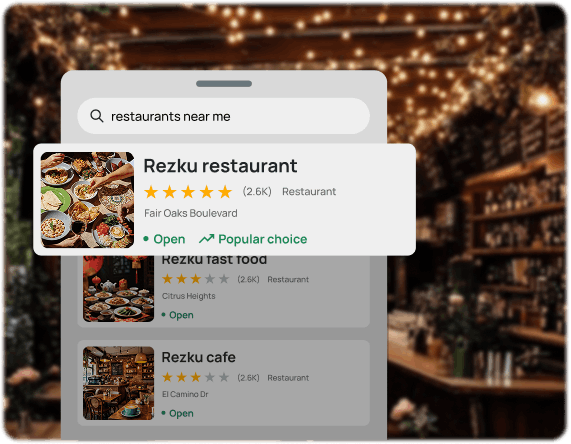
Google Business Profile (GBP) 90% of guests research a restaurant online before visiting, and the Google Map Pack — the top three local results — captures over 90% of local search traffic for restaurant queries. If you’re not in the Map Pack for your cuisine and neighborhood, you’re effectively invisible to hungry people deciding right now.
A high-performing GBP requires: accurate hours (updated for holidays, seasonal changes), a full menu link to your website, high-quality photos updated at least quarterly, active responses to every review — positive and negative — and a consistent stream of Google Posts promoting events, seasonal specials, and new menu items. Restaurants that respond to reviews see a 35% higher customer return rate.
Your Restaurant Website 78% of restaurant websites lack proper mobile optimization — and that’s the version of your business that a guest on their phone sees when they Google you at 6:45 PM on a Friday. A slow, broken, or hard-to-navigate mobile site doesn’t just fail to convert — it actively signals that you’re not a professional operation.
Your website must do three jobs: (1) give guests everything they need to make a reservation or place an order in under 30 seconds, (2) capture email addresses and loyalty sign-ups at every possible entry point, and (3) rank in local search through SEO-optimized content, HTML menu pages, and schema markup. Adding online reservations alone increases website conversion by 19%, and restaurants using online ordering links on Google see 2.5× more orders.
Build Your Owned Audience: Email and SMS
Your email and SMS list is the most valuable marketing asset you can build — more valuable than your Instagram following, more durable than your Yelp ranking, and completely immune to algorithm changes. It’s a direct line to your guests that you own and control.
Email marketing delivers the highest ROI of any channel at 4,200%, and retention campaigns generate 3.3x the ROI of acquisition-focused efforts. The reason the ROI is so high is simple: you’re not trying to convince a stranger to try your restaurant. You’re reminding someone who already loves you that you exist and giving them a reason to come back.
The campaigns that consistently produce the highest return across all full-service restaurant types:
Welcome Series — Triggered within 24 hours of a first visit or loyalty sign-up. Automated post-visit email sequences triggered within 24 hours generate 3–5× higher open rates than generic promotional blasts. A simple “thank you for visiting, here’s something for your next trip” message with a time-sensitive offer converts at rates that no cold campaign can touch.
Birthday and Anniversary Campaigns — Birthday campaigns generate an average $42 per redemption with a 35% redemption rate. Triggered 7–10 days before the date, these campaigns are the closest thing to a guaranteed reservation in restaurant marketing.
Win-Back Campaigns — SMS wins back 12% of lapsed guests versus 4% for email alone. For full-service restaurants, a 45–60 day silence is the trigger threshold. A two-step sequence — email first, SMS follow-up if no action — recovers guests at a cost of pennies per message.
Timed and Daypart Offers — This is where full-service restaurants have a structural advantage over quick service. A “midweek chef’s special” available only Tuesday and Wednesday, a “last-minute table” offer sent at 4 PM on a slow Thursday, or a “Sunday brunch, first round on us” promotion can fill specific daypart gaps with surgical precision. 81% of full-service diners say they would use discounts for dining on less busy days, and 86% say they would respond to real-time promotional offers. Timed offers aren’t just discounts — they’re demand-shifting tools that protect your peak margins while filling your valleys.
Loyalty Milestone Messages — When a guest hits 5 visits, 10 visits, or a spend threshold, a personalized acknowledgment — “You’re officially a regular. Here’s something from us” — creates an emotional connection that punch cards never could. Loyalty program members visit restaurants 20% more frequently and spend 20% more per visit.
The frequency rule: No guest should receive more than two emails and two SMS messages per week. Exceeding this frequency doubles unsubscribe rates for restaurant lists. More is not better. Timely and relevant always beats frequent.
How Rezku Helps
Rezku’s automated loyalty promotion system connects directly to your POS data and triggers SMS and email campaigns based on real guest behavior — first visits, lapse thresholds, birthdays, spend milestones — without requiring you to build or manage a separate marketing platform. Timed coupons can be set to deploy at specific windows (Tuesday afternoon, slow Sunday morning) and expire automatically, creating real urgency without the logistics of manual promotions. Because it’s all inside the same system as your POS and website, the data flows automatically and the campaigns run while you’re focused on service.
Social Media: Choose Your Battleground
72% of diners turn to social media to research restaurants, and 68% check a restaurant’s social profiles before visiting. Social media is no longer optional — but it is a place where many operators waste enormous amounts of time by being everywhere and effective nowhere.
Pick one or two platforms based on your concept and commit:
Instagram is the dominant platform for food-forward concepts — fine dining, farm-to-table, craft cocktail bars, upscale casual. As of July 2025, Instagram content is indexed by Google, which means a well-captioned Reel with location keywords can appear in search results. Short-form video (Reels under 30 seconds) consistently outperforms static images for reach. Behind-the-scenes kitchen content, plating reveals, and staff personality-forward content build the kind of connection that makes guests feel like regulars before they’ve walked in the door. Guests are 2.1× more likely to post if there is a photogenic element or striking plating. Design your space and presentation with this in mind.
Facebook remains valuable for community-oriented concepts — neighborhood bistros, sports bars, family-friendly restaurants — where the guest is local and event-driven. Private dining room promotions, weekly specials, trivia nights, and local sports watch parties all perform well on Facebook because the intent is community and planning, not pure discovery.
TikTok is worth serious attention for concepts that can create genuinely entertaining content. 29% of diners say they have chosen a restaurant solely because it looked good on TikTok. The barrier to entry is low — a 12-second video of an interesting kitchen technique or a dramatic tableside presentation can generate tens of thousands of local views for free. The caveat: consistency matters more than production quality, and TikTok rewards personality, not polish.
Paid Social should be the last thing you activate, not the first. Restaurant paid social campaigns on Facebook and Instagram convert at 6–12% for reservation clicks with cost-per-click as low as $0.40. A $200 monthly budget targeting your zip code and surrounding areas is enough to generate 30–50 qualified reservation link clicks — enough to test whether a specific offer or event concept converts before scaling.
Local Partnerships and Community Presence
For full-service restaurants especially, the offline reputation still carries enormous weight. Local partnerships — the gym that hands out your happy hour card, the hotel concierge who recommends you to guests, the corporate office whose team books your private dining room for quarterly dinners — generate the kind of trusted word-of-mouth that no ad can replicate.
Smaller group events of 20–30 guests and year-round functions like team dinners, milestone lunches, and client appreciation events are consistently undermarketed, representing a major untapped revenue stream for most restaurants. If you have a private dining room or semi-private event space, dedicate a portion of your marketing budget specifically to reaching local corporate clients and event planners — the ROI on a booked event is dramatically higher than an equivalent number of covers from regular dinner service.
Step 4: Build a 90-Day Marketing Calendar
A marketing plan doesn’t become a plan until it has dates attached. The 90-day sprint model works better than annual planning for most independent restaurants because it’s short enough to be responsive to what’s actually happening, and long enough to build momentum.
Here’s what a 90-day calendar looks like for a neighborhood fine-casual bistro heading into summer:
Month 1 — Foundation and Summer Menu Launch
- Week 1: Email the full guest list with a “summer menu preview” — a single hero dish with a compelling description and a reservation link. No coupon needed; this is aspiration marketing.
- Week 2: Post 3 Instagram Reels showcasing the new seasonal dishes. Include location hashtags in every caption.
- Week 3: Launch a timed “summer opening week” offer — a complimentary amuse-bouche for any reservation booked that week, deployed via SMS to loyalty members only.
- Week 4: Reach out to two local businesses (nearby hotel, office building) about private dining options for summer team events.
Month 2 — Midweek Traffic and Retention
- Week 1: Deploy a Wednesday night “chef’s table experience” promotion — limited to 8 guests, email-only announcement, first-come-first-served. Creates scarcity and rewards your email list.
- Week 2: Trigger automated win-back SMS to any guest who hasn’t visited in 45+ days. Offer: complimentary dessert on their next visit.
- Week 3: Post a “meet the team” Instagram series — one staff member per day for a week. Research consistently shows that restaurants that highlight staff personalities build stronger loyalty bonds.
- Week 4: Pull POS data. Which new summer dishes are selling? Which aren’t? Adjust social media to promote the winners. Brief staff on the data too.
Month 3 — Events, Loyalty Push, and Q4 Planning
- Week 1: Announce a late-summer cocktail event or prix-fixe evening. Email to the full list, SMS to loyalty members with priority reservation access.
- Week 2: Run a referral push — loyalty members who bring a first-time guest earn a bonus reward. Track via your loyalty system, not honor system.
- Week 3: Begin planning fall/holiday season. Block out Mother’s Day, New Year’s Eve, Valentine’s Day, and holiday party season in your calendar now. These fill up before most operators think to promote them. A simple personalized outreach to past event bookers 10–11 months after their event — “Planning something this year?” — can generate significant revenue with almost zero ad spend.
- Week 4: Monthly review. What drove covers? What missed? Shift next month’s budget accordingly.
Step 5: Set a Budget That Reflects an Investment, Not an Expense
Marketing budgets of 3–6% of revenue are now benchmarked against 300–500% ROI targets in the restaurant industry. That reframe matters. Marketing is not a cost center — it’s a revenue engine. Every dollar you allocate should have an expected return attached to it.
For a full-service restaurant doing $1.2M in annual revenue, a 4% marketing budget is $48,000 per year — $4,000 per month. Here’s how to allocate it across a typical full-service concept:
| Channel | Monthly Budget | Purpose |
|---|---|---|
| Email + SMS Automation Platform | $150–$300 | Win-backs, birthday offers, timed promotions, loyalty campaigns |
| Paid Social (Facebook/Instagram) | $400–$600 | Targeted offers to local audience, event promotion |
| Content and Photography | $500–$800 | Monthly photo shoot for social and website; short-form video content |
| Local Partnerships and Events | $500–$700 | Event sponsorships, corporate outreach, community presence |
| Google Ads (optional, search-intent) | $300–$500 | Capture “best [cuisine] near me” searches when organic ranking is competitive |
| Contingency | $400–$600 | Double down on what’s working; respond to opportunities |
Double down on what’s working; respond to opportunities
The most common budget mistake: spending heavily on paid acquisition before retention systems are in place. Acquiring a new customer costs 5–7x more than retaining an existing one. If you don’t have an automated email welcome series, a birthday campaign, and a win-back sequence running, those are higher-ROI investments than any Facebook ad campaign.

Step 6: Measure What Actually Matters
The goal of measurement isn’t just to obsess over your marketing dashboard. It’s for making better decisions faster. Block 30 minutes at the end of every month and answer five questions from your actual data:
- Did covers increase in the periods I targeted? Compare promoted periods against the same period last year and against your baseline average.
- What did the win-back campaign recover? Count the guests who returned after the automated outreach and calculate their combined spend.
- Which offers redeemed, and at what rate? A timed coupon with a 2% redemption rate is telling you something different than one with a 22% rate.
- Where are new guests coming from? Train your host to ask every new face. A tally at the host stand is unsophisticated and invaluable.
- What is my repeat visit rate versus 90 days ago? Increasing customer retention by just 5% can increase profits by 25–75%. This is the single metric that most changes the profitability of a full-service restaurant over time.
Use what you learn to drop what’s not working and reinvest in what is. Marketing is iterative, not permanent. The 90-day calendar gives you natural checkpoints to make those calls without sentimentality.
The One-Page Framework: Put It All Together
Here’s the distilled version — the one-page marketing framework that turns this into a weekly operating tool rather than a document that lives in a drawer.
-
Your Identity: What you do better than anyone for your specific guest. One sentence. Non-negotiable anchor for every marketing decision.
-
Your Target Guest: Two or three specific personas. Named, described, understood. Not “adults 25–55.”
-
Your KPI Baseline: Average check, repeat visit rate, covers by daypart, Customer Lifetime Value (CLV). Reviewed monthly.
-
Your Non-Negotiables: Google Business Profile (GBP) fully optimized. Website mobile-fast and loyalty-capture-ready. Automated welcome, birthday, and win-back campaigns running.
-
Your Budget: A percentage of revenue allocated by channel. Every dollar tracked against a specific campaign or marketing goal.
-
Your 90-Day Focus: One primary traffic problem to solve. One specific goal. Three channels. Dated calendar for a plan of action.
That’s it. 30 minutes. Six questions. One decision: what stays, what goes, what gets more attention.
That’s the whole framework. It’s not a 50-page document — it’s a decision-making system that makes every marketing action intentional rather than reactive.
Frequently Asked Questions
Q: How much should a full-service restaurant spend on marketing?
The industry standard is 3–6% of total revenue. Newer restaurants and those launching into competitive markets should lean toward 6% to build momentum. Established restaurants with strong loyalty and repeat traffic can operate closer to 3%. The more important discipline is treating that number as an investment with an expected return — not a line item to cut when things get tight. The restaurants that cut marketing during slow periods are the ones that struggle to recover when conditions improve.
Q: What’s the most effective marketing strategy for a full-service restaurant in 2026?
The highest-ROI strategy for most full-service restaurants is not a new customer acquisition campaign — it’s retention. Retention campaigns generate 3.3x the ROI of acquisition efforts. That means: automated email and SMS campaigns that bring existing guests back, a loyalty program that rewards frequency and spend, and a birthday/anniversary marketing system that makes guests feel known. Once those retention foundations are in place, Google Business Profile optimization and organic social media are the most cost-effective acquisition channels for most independent operators.
Q: How do timed offers work, and are they appropriate for fine dining or upscale concepts?
Timed offers — promotions that are only available during specific hours, days, or windows — are one of the most effective demand-shifting tools in restaurant marketing. 81% of full-service diners say they would use discounts for dining on less busy days. For upscale concepts, the key is framing: a “midweek chef’s tasting experience” at a reduced price point is aspirational, not discount-driven. A “Sunday supper prix-fixe” fills a quiet service without signaling desperation. The offer design matters enormously. Done correctly, timed offers fill gaps without training your regulars to wait for deals.
Q: How do I build an email list if I’m starting from scratch?
Start with three channels simultaneously: a sign-up form on your website (ideally with a small incentive — a complimentary appetizer on the next visit, access to a reservation priority window), a loyalty enrollment ask at the point of payment or host stand, and a social media bio link to your sign-up page. The average independent restaurant already has access to 2,000–5,000 guest records through existing POS, reservation, and online ordering systems — the problem is usually that the data lives in silos that don’t connect to any marketing tool. A unified platform solves this immediately.
Q: How often should I email and text my guest list?
For most full-service restaurants, two emails and one to two SMS messages per week is the ceiling. Below that threshold, frequency drives open rates and conversion. Above it, unsubscribes accelerate. The more important variable than frequency is relevance — a timely, specific offer tied to guest behavior (your birthday, your loyalty milestone, the fact that you haven’t been in a while) will always outperform a generic promotion regardless of timing. Personalization matters more than volume.
Q: How do I measure whether my marketing is actually working?
Track the metrics that connect directly to covers and revenue: repeat visit rate (how many guests from any 30-day window return within 90 days), coupon and offer redemption rates, covers by day and daypart versus the same period last year, and the source attribution you collect at the host stand (“how did you hear about us?”). Social media likes, follower counts, and email open rates are useful secondary signals but not primary success metrics. The question to ask about every campaign is: did it put people in seats?
Q: How does Rezku’s platform support a restaurant marketing plan like this?
Rezku connects the tools that most restaurant marketing plans assume are separate: your POS (where guest transaction data lives), your website (where guests discover you and sign up for loyalty), and your automated marketing system (where email, SMS, and timed offers deploy based on real guest behavior). Because it’s one integrated platform, the data flows automatically — a guest’s first visit triggers a welcome campaign without any manual export or integration work. Timed coupons are set up once and deploy on the schedule you choose, expiring automatically. Loyalty points, birthday campaigns, and win-back sequences all run in the background while you focus on the dining room. For full-service restaurants that don’t have a dedicated marketing team, that automation is the difference between a marketing plan that exists on paper and one that actually fills tables.
Rezku was built by restaurant people, for restaurant people. Our platform combines POS reporting, automated SMS and email loyalty marketing, timed promotions, and a restaurant-optimized website into one connected system — so your guest data works as hard as you do. Ready to see what it looks like for your concept? We’d love to show you.
Is Rezku the POS system you’ve been searching for?
Get a custom quote and start your free trial today.
Related Posts